You have returned to the top of the page.
TOWARDS
ZERO
August 2024
Scientific discovery is the key to reaching our vision of Zero Deaths from breast cancer. Your support means we can continue to fund world-class breast cancer research. We spoke to NBCF-funded researchers for National Science Week, which is celebrated from 10-18 August, about some of the technology they are using in their labs. Thanks to the generosity of people like you, their incredible work is improving our understanding of how breast cancer originates, grows and spreads.
Laser focused on the complexities of cancer cells
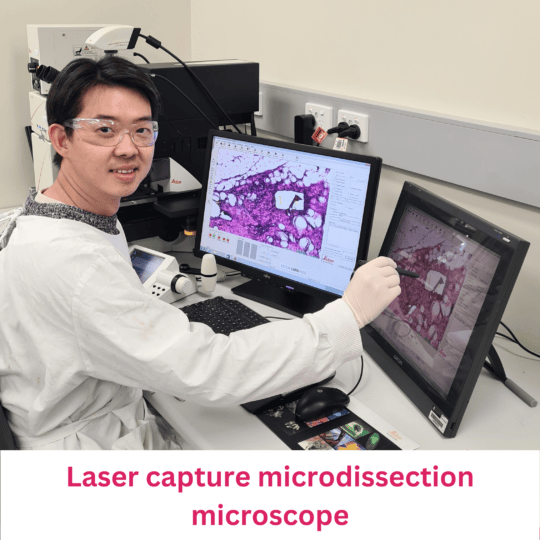
Associate Professor Peter Simpson is using a laser capture microdissection microscope for his NBCF-funded research at the University of Queensland to help understand the causes of breast cancer in young women. This unique microscope uses a powerful laser beam to precisely cut and isolate specific cells from breast tumour tissue samples. His research team can then extract and analyse DNA to find genetic differences that cause cancer to develop and grow.
“We want to find out what causes early breast cancer at the genetic level. So, we examine different types of breast tissue, including normal tissue, early-stage (pre-cancerous) breast lesions and cancerous breast tissues,” Associate Professor Simpson says.
Getting under the hood to test new treatments
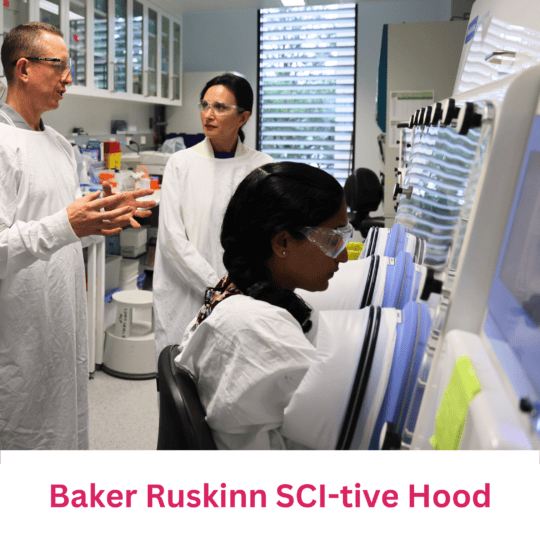
Figuring out how different treatments and drugs affect cancer cells requires the right environment for cells to grow. That’s why NBCF-funded Professor Jeff Holst is using a special piece of equipment called a 'Baker Ruskinn SCI-tive Hood' in his research at University of NSW.
“These physiological hoods essentially trick the cancer cells into thinking they are still in the body,” Professor Jeff Holst says.
Described as a ‘lab in a box’, the equipment provides a stable environment that mimics conditions in the human body like oxygen levels. This encourages breast cancer cells to grow so researchers can test drugs and personalised treatment options.
University of NSW will soon be home to six of these devices, making it the largest 3D physiological culture suite in Australia for cancer models.
“These physiological hoods essentially trick the cancer cells into thinking they are still in the body,” Professor Jeff Holst says.
Described as a ‘lab in a box’, the equipment provides a stable environment that mimics conditions in the human body like oxygen levels. This encourages breast cancer cells to grow so researchers can test drugs and personalised treatment options.
University of NSW will soon be home to six of these devices, making it the largest 3D physiological culture suite in Australia for cancer models.
Deciphering cancer messages
Breast cancer cells release messages that confuse the body’s defense systems, which allows tumors to grow in other parts of the body. These messages that are sent out for cell-to-cell communication are carried in packages called extracellular vesicles.
NBCF-funded researcher Associate Professor Joy Wolfram from the University of Queensland has created a new way to capture these messages, so researchers can better understand and block them with new treatments.
“Scientists usually use a rotating device to generate high centrifugal forces to separate extracellular vesicles from other parts of surrounding breast cancer fluid. But this method isn’t very effective, as messages are often damaged or not separated well enough,” Associate Professor Wolfram says.
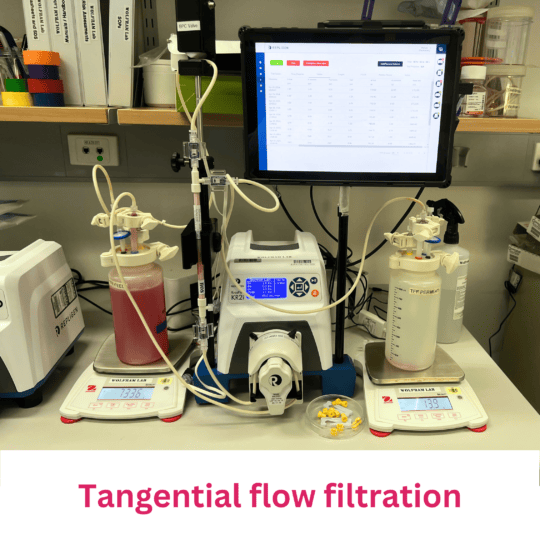
Associate Professor Wolfram’s new method separates and purifies the vesicles by pushing fluid across special filters with precise hole sizes. The three-stage process is gentle enough to separate the vesicles from cell debris and other molecules without too much damage. It’s incredible to think what messages they hold, and how deciphering them could lead to breakthroughs in breast cancer treatment.
Your continued support means Australian researchers have the equipment they need to advance our understanding of breast cancer and continue to power life-saving research discoveries. Thank you!
Pink Ribbon Breastfast has officially returned for 2024 and we are making this year our biggest yet with lots of fun new features, a new VIP club - called 'The Breastfast Club' and some great prizes to be won.
“The backyard barbie has been amazing at raising awareness amongst my friends and community, with many getting checked and some finding early signs of breast cancer. I am so proud that the event raises important funds for world-class breast cancer research.” – Julie
Join in the fun. Raise your teacup this October during Breast Cancer Awareness Month and host a Pink Ribbon Breakfast in support of the 1 in 7 Australian women diagnosed with breast cancer in their lifetime. We can’t support them without you.

Complete our Science Week quiz to expand your understanding of breast cancer research and delve into the wonders of science. Put your breast cancer and general science knowledge to the test. Broaden your knowledge and learn more about groundbreaking research discoveries.
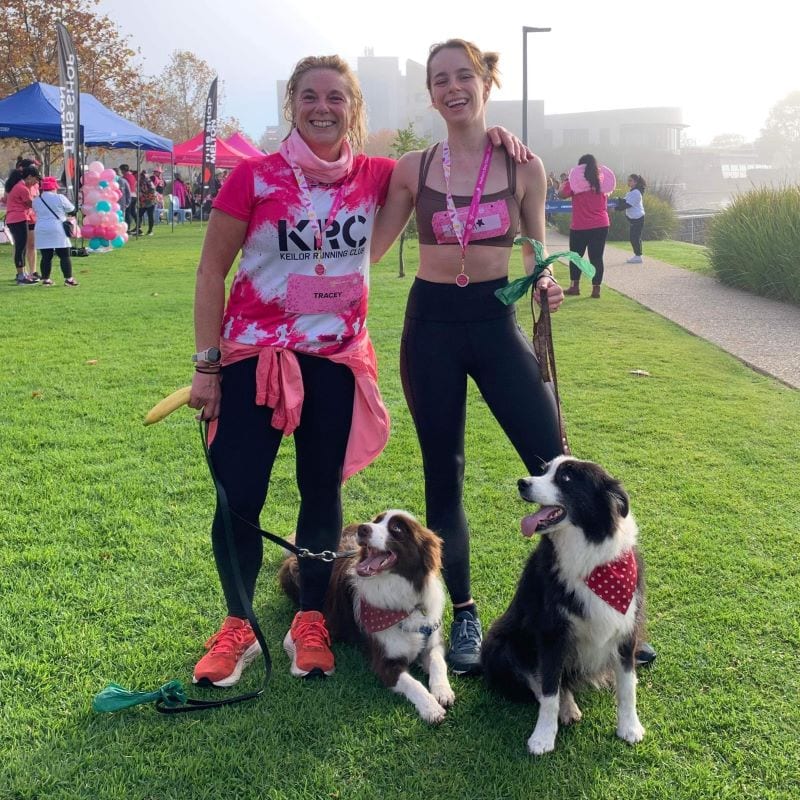
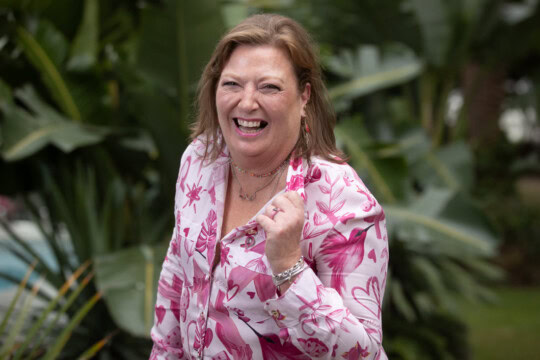
Meet Tracey Pratt. As the newest member of our Philanthropy team, Tracey is committed to making a positive difference to help NBCF end deaths from breast cancer.
Within her first month at NBCF, Tracey participated in the Mother’s Day Classic event joined by her daughter and two Border Collies.
“This event is incredibly meaningful to me, having seen the devastating impact of breast cancer firsthand. Every step was a testament to our collective effort to raise funds and awareness for breast cancer research,” said Tracey.
“Together, we can drive groundbreaking research, improve early detection, stop the progression of breast cancer, and enhance treatment. I am honoured to share my passion and commitment with you, our valued supporters.”
Welcome to the team Tracey!