Words by Sylvia Lee
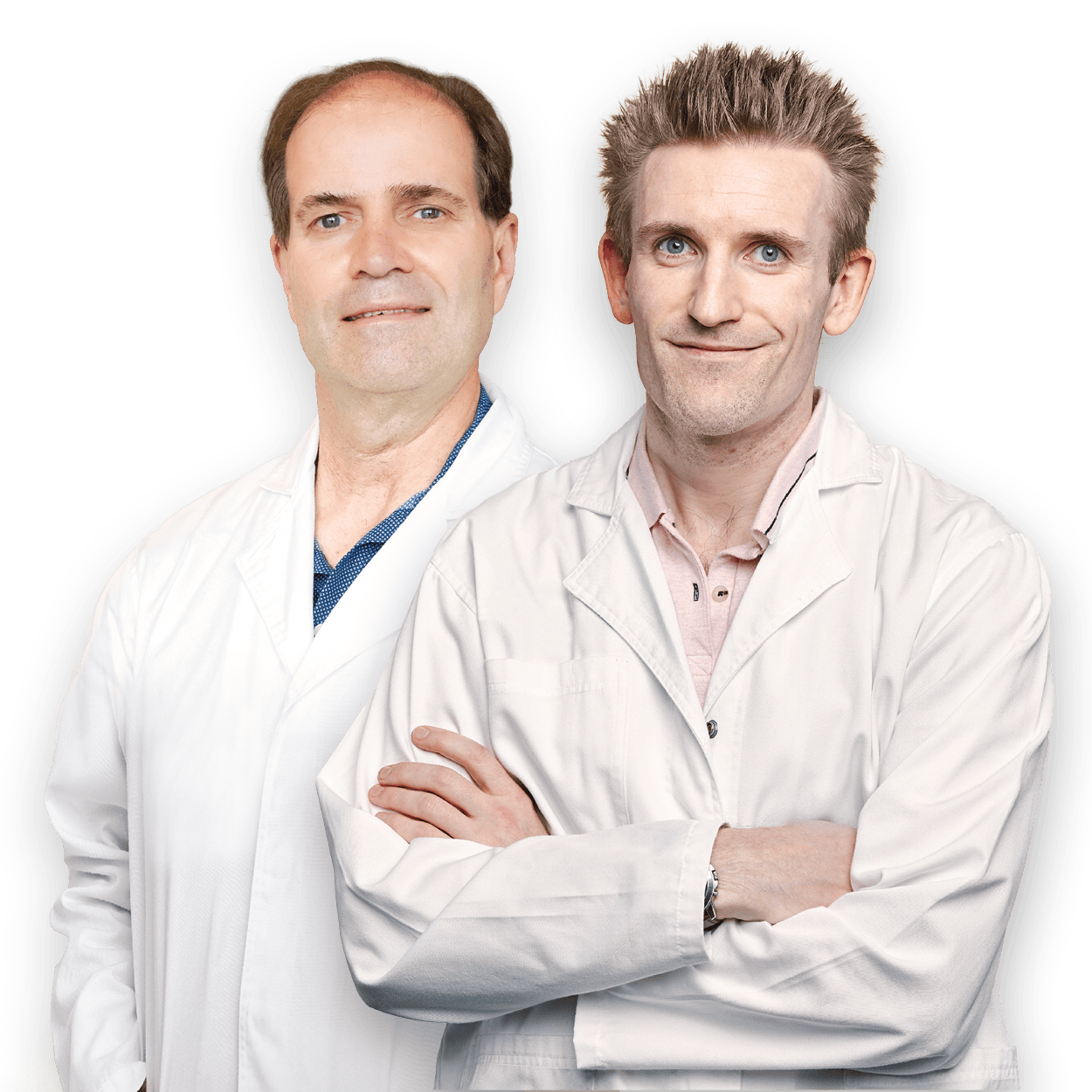
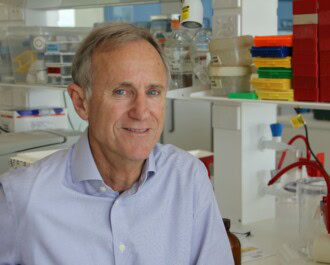
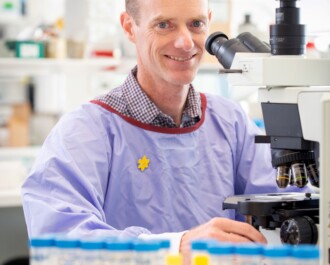
NBCF-funded researchers Professor Phil Darcy (left) and Professor Paul Beavis (right) from the Peter MacCallum Cancer Centre
Thanks to funding from the National Breast Cancer Foundation (NBCF), researchers at the Peter MacCallum Cancer Centre have made a remarkable breakthrough. Led by Professor Paul Beavis and Professor Phil Darcy, these brilliant minds have pioneered a next-generation approach to Chimeric Antigen Receptor (CAR) T-cell therapy for breast cancer.
It’s not every day that a researcher finds themselves being published in Nature, one of the world’s most reputable scientific journals, which only accepts the very best research. Professor Beavis, Professor Darcy and their team’s latest discovery of a new approach to deliver CAR T-cell therapy could transform treatment for breast cancer, and even other solid tumours.
Known as a ‘living drug’, CAR T-cell therapy uses a person’s own immune cells (T cells) that are genetically engineered to enhance their ability to detect and kill cancer cells. But until now, it hasn’t been as successful at treating solid tumours like breast cancer as it has been with blood cancers.
“My grandmother was a breast cancer survivor and sadly, my former PhD supervisor died of breast cancer. Through my connections to the community and previous NBCF funding, I am very aware of the impact that breast cancer can have on a person and their family and friends. This drives me to try and find ways to improve the treatment of this disease.” Professor Paul Beavis, NBCF-funded researcher
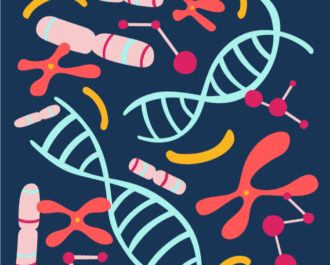
Key to this research is the use of a revolutionary gene editing tool called CRISPR. This brilliant technology, developed by Noble Laureates Dr Emmanuelle Charpentier and Dr Jennifer Doudna in 2012, is adapted from a natural process found in the immune defence system of bacteria. It enables scientists to ‘cut and paste’ sections of DNA with a precise pair of ’genetic scissors’ to permanently add, remove or alter the genes of almost any living cell or organism, including people.
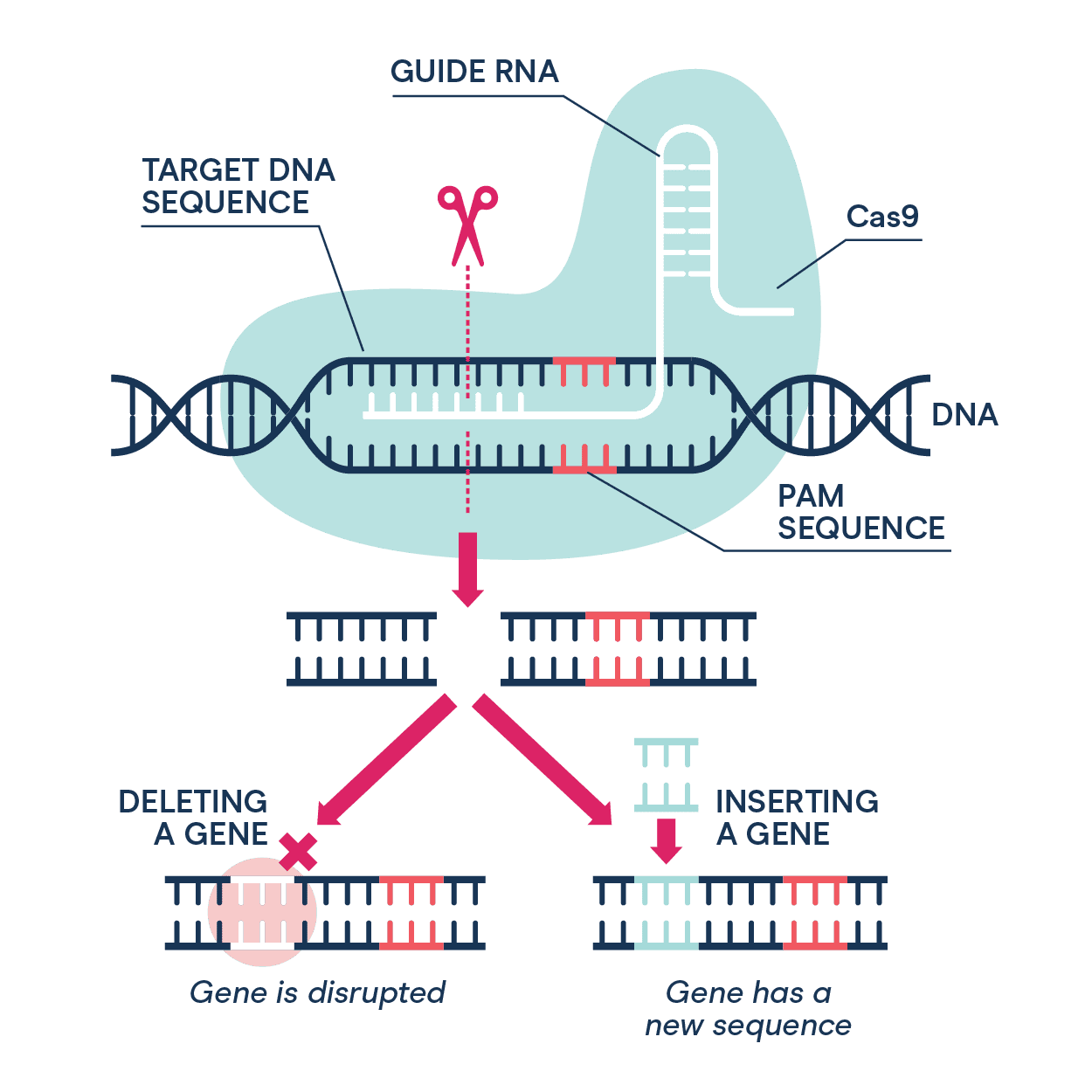
A diagram of CRISPR gene editing
Using CRISPR gene editing, Professor Beavis, Professor Darcy and their team have developed ‘armoured’ CAR T cells – Precision Guided Munition (PGM) CAR T cells – that deliver immune-boosting proteins called cytokines directly to the tumour site.
The researchers were able to achieve this by harnessing the body’s natural gene ‘on switches’ called promoters to support the armoured T cells’ release of the cytokines only where they’re needed. This creates a precise and potent immune response against cancer, avoiding causing damage to healthy tissue and reducing harmful side effects.
In nearly all lab models of breast, colon and ovarian cancer, these armoured T cells successfully treated the tumours and dramatically reduced harmful side effects.
“We are deeply grateful and would like to acknowledge the continued support of our work from NBCF for developing new approaches for enhancing CAR T-cell therapies. In particular, the funding contributed significantly to the development and evaluation of our CRISPR/HDR editing technology … that enabled the eradication of a broad range of tumour types in preclinical models, including breast cancer. This is a key step prior to testing this novel approach in people living with breast cancer.” Professor Phil Darcy, NBCF-funded researcher
With such promising results, Professor Beavis, Professor Darcy and their team are looking to undertake the first clinical trial of PGM CAR T-cell therapy in solid tumours, including breast cancer.
This research is a vital step towards NBCF’s vision of Zero Deaths from breast cancer. Thanks to the amazing support of the NBCF community, these dedicated researchers can continue their pioneering research, bringing us closer to safer and more effective immunotherapy for people diagnosed with breast cancer.
To support world-class breast research like this, you can fundraise for NBCF or make a donation.
More News Articles
View all News