Stop
You have returned to the top of the page.
Published: 08/7/25 12:00 AM
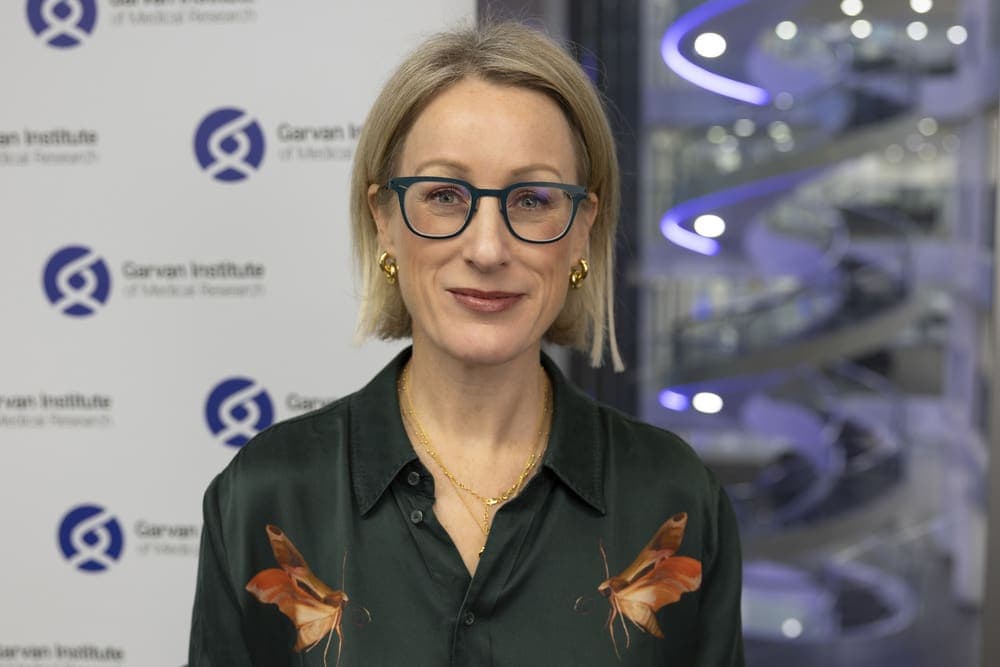
An exceptional local and international collaboration led by Associate Professor Christine Chaffer at the Garvan Institute of Medical Research, will be the first recipient of the National Breast Cancer Foundation’s (NBCF) inaugural Collaborative Research Accelerator Grant. The first Collaborative Research Accelerator Grant will drive forward a pioneering research program called ‘AllClear’, which is focused on stopping breast cancer recurrence.
AllClear is enabled by Garvan’s strategic collaboration with St Vincent’s Hospital Sydney and UNSW Sydney and is a collaboration of nearly 60 researchers across seven leading research institutes and organisations. This includes Breast Cancer Trials, the University of Sydney, the University of Newcastle, together with world-renowned international partners including Yale and Washington University, and 11 hospitals across NSW.
The AllClear research program integrates the voices of people with lived experience of breast cancer, and ensures diverse representation from metropolitan, regional, rural, and multicultural communities. In particular, AllClear aims to improve the inclusion of underserved communities affected by breast cancer, such as Aboriginal and Torres Strait Islander peoples, culturally and linguistically diverse (CALD) populations, lower socioeconomic groups, and people living in rural and regional communities.
Every year, more than 20,000 people will be diagnosed with breast cancer in Australia. Some of them already have dormant (‘sleeping’) breast cancer cells that have spread and are quietly hiding in other parts of their body, most commonly in the bone. Unfortunately, for some people, these cancer cells can reactivate (‘wake up’), often after many years, and lead to metastatic breast cancer that is harder to treat.
The goal for the AllClear program is to ultimately halve deaths from breast cancer by tackling one of the most urgent and complex challenges: how to stop breast cancer from coming back. Through extensive collaborations, clinical networks, and harnessing advanced technologies, including high-resolution imaging, machine learning, molecular profiling and biomarker discovery, the AllClear program aims to better predict cancer recurrence, develop new therapies, and fast-track the testing of these therapies through cutting-edge clinical trials that capture a diverse cohort of people living with breast cancer.
With the support of NBCF funding, the AllClear team will study these cancer cells in the bone to understand how they become dormant and hide from the immune system, how they are different to cells in the primary tumour in the breast, why current treatments may fail, and how to eradicate these cells to stop recurrence. They will develop the world’s first and largest biobank of primary breast tumours paired with corresponding bone samples, collected at multiple stages throughout the course of the disease. They will characterise primary tumour and dormant cells residing in the bone of over 400 people with breast cancer in Australia and over 450 people internationally. This research will develop tools to predict who is most at risk of recurrence and develop targeted therapies to eliminate dormant cells, before they reawaken and cause metastatic breast cancer.
Until recently, it was not possible to identify and study dormant cells and distinguish them from reactivated cells – but members of the AllClear team have developed novel high-resolution technologies that enable them to understand the changes that breast cancer cells undergo as they spread to the bone, become dormant, reawaken and metastasise.
The AllClear team have discovered that when breast cancer cells spread to the bone, they transition to a dormant state, which is behaviourally and genetically different from when they are reactivated. They have found that dormant cells are able to remain hidden from the immune system by ‘cloaking’ themselves.
By intervening at this critical stage and discovering a way to remove this ‘cloak’ and eradicate the dormant cancer cells before they reawaken, AllClear has the potential to prevent recurrence and save lives.
Each year, more than 20,000 people will be diagnosed with breast cancer and around 3,300 Australians still die from breast cancer. This is largely caused by recurrence leading to metastatic disease.
For some of these people newly diagnosed with breast cancer, cancer cells may already be hiding quietly in the body, most commonly in the bone, reappearing years or even decades later. Around 15% of people will experience this within 10 years, and this return can be life-threatening.
Despite decades of progress, breast cancer recurrence is still a major challenge that continues to cost lives. Solving it is essential to helping to end deaths from breast cancer.
The goal for the AllClear program is to ultimately halve deaths from breast cancer by unlocking one of the most important questions in breast cancer research: how to stop it from coming back. These findings could lead to biomarkers that can accurately predict who is at risk of recurrence, and inform the development of new targeted therapies to stop recurrence. Finding ways to stop breast cancer recurrence could also benefit people living with other cancers, bringing hope to countless people and communities.
Learn more about NBCF’s inaugural Collaborative Research Accelerator (CRA) program.
Last updated November 2025. Content may be revised as new data/information becomes available.