Prevent
You have returned to the top of the page.
Published: 08/27/26 12:01 AM
Co-funded by the National Breast Cancer Foundation (NBCF) and Cancer Institute NSW (CINSW)
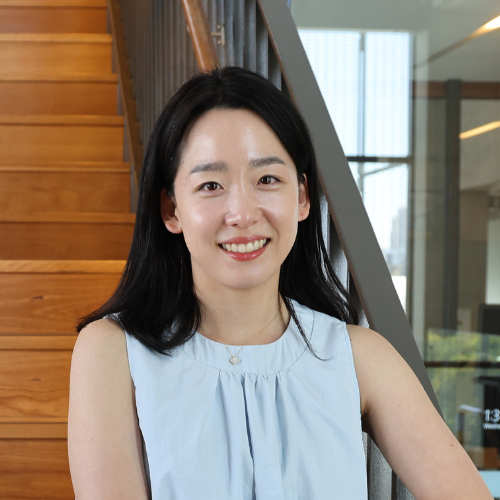
Dr Hani Jieun Kim is a Senior Research Officer at the Garvan Institute of Medical Research. She is also a Conjoint Lecturer at UNSW Sydney.
Breast cancer is the most commonly diagnosed cancer and the second leading cancer of cancer death in women in Australia. While treatments continue to improve, we still lack a clear understanding of the very earliest and potentially reversible steps that push healthy breast cells toward becoming cancerous.
Much of current prevention research focuses on Ductal Carcinoma In Situ (DCIS), an early, precancerous stage of breast cancer development. However, by the time DCIS is detected, the first important biological changes that begin the cancer process have already taken place. These early changes, when normal cells start on the path to becoming cancer cells, are subtle and could potentially be reversible. By understanding and targeting these earliest, invisible changes, we could move from managing early disease to stopping breast cancer before it starts, representing a genuine paradigm shift in prevention.
Dr Hani Jieun Kim’s Pink Sky Grant project, co-funded by the National Breast Cancer Foundation (NBCF) and Cancer Institute NSW (CINSW), aims to identify the ‘point of no return’: the earliest molecular changes in breast tissue that turn a normal cell into a precancerous one. She and her team at the Garvan Institute of Medical Research will use cutting-edge single-cell technologies to study thousands of individual breast cells in unprecedented detail, enabling them to measure both gene activity and how DNA is structured in each cell at the same time. This combined data will help pinpoint the DNA ‘switches’ that occur in normal cells that may initiate cancer development.
Dr Kim and her team will also use the spatial mapping technique to create a detailed ‘map’ that locates precisely where these early-changing cells are located within breast tissue. This allows researchers to see the physical characteristics of these cells and how they interact with other neighbouring cells in the breast tissue, such as immune cells.
If successful, Dr Kim’s Pink Sky Grant project will biologically define and map the earliest stages of breast cancer development, revealing the molecular switches and environmental interactions that initiate disease long before it becomes invasive. This could lay the foundations for a new generation of early prediction and detection tests, interception therapies, and precision prevention strategies tailored to each individual.
Grant code: 2025/PS0135
Active years: 2026-2029
Scientific project title: Decoding the regulatory landscape of breast cancer using single-cell multiomics