Stop
You have returned to the top of the page.
Published: 08/27/26 12:01 AM
Co-funded by the National Breast Cancer Foundation (NBCF) and Cancer Institute NSW (CINSW)
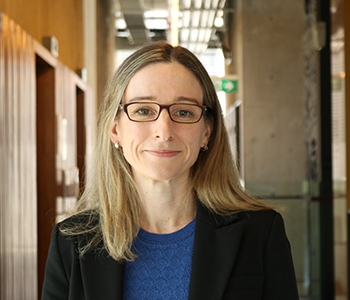
Associate Professor Liz Caldon is a Lab Head at the Garvan Institute of Medical Research.
Estrogen Receptor Positive (ER+) breast cancer is the most common type of breast cancer and grows in response to the hormone estrogen. While breast cancer survival has improved in the last 30 years, metastatic recurrence of ER+ breast cancer occurs in up to 30% of people. It is a major clinical challenge responsible for the majority of all breast cancer-related deaths.
While existing treatments, such as hormone-blocking therapies and CDK4/6 inhibitors, can reduce the risk of recurrence, they can cause severe and debilitating side effects that may result in people being unable to complete their full course of treatment.
Surgery is an essential part of breast cancer treatment for many people. The period during and shortly after surgery is an important time, as surgical procedures may trigger inflammation and the spread of some cancer cells. Importantly, however, this same period may also be a valuable opportunity for doctors to take steps that may help lower the risk of cancer spreading or coming back.
Recent research findings from Associate Professor Liz Caldon and her team at the Garvan Institute of Medical Research have found that a key signalling pathway, known as the Rac pathway, is overactivated in ER+ breast cancer cells and may be activated during the spread of cancer. They discovered that ketorolac, a safe painkiller widely used overseas in people following breast cancer surgeries, can block the Rac pathway in ER+ breast cancer cells.
Associate Professor Caldon’s Pink Sky Grant project, co-funded by the National Breast Cancer Foundation (NBCF) and Cancer Institute NSW (CINSW), will use laboratory-based ER+ breast cancer models to test the effect of giving ketorolac in combination with standard-of-care treatment therapies or during surgery. They aim to determine if the drug can reduce cancer spread and recurrence, and make tumours less aggressive. Excitingly, the team will also aim to assess whether dosing with ketorolac can simultaneously reduce pain and directly target the biological mechanism of cancer spread.
If successful, Associate Professor Caldon’s Pink Sky Grant project will provide strong scientific evidence for assessing ketorolac as an effective and accessible therapy for ER+ breast cancer. Repurposing an existing medication like ketorolac would be a cost-effective and globally accessible strategy for recurrence prevention and pain relief (without opioid dependence). These findings have the potential to reshape the current management of breast cancer to reduce breast cancer deaths and improve long-term survival for people affected by breast cancer.
Grant code: 2025/PS0035
Active years: 2026-2029
Scientific project title: Harnessing peri and post operative Ketorolac to prevent ER+ breast cancer recurrence