
Treat
You have returned to the top of the page.
Published: 08/27/26 12:01 AM
Co-funded by the National Breast Cancer Foundation (NBCF) and Cancer Institute NSW (CINSW).
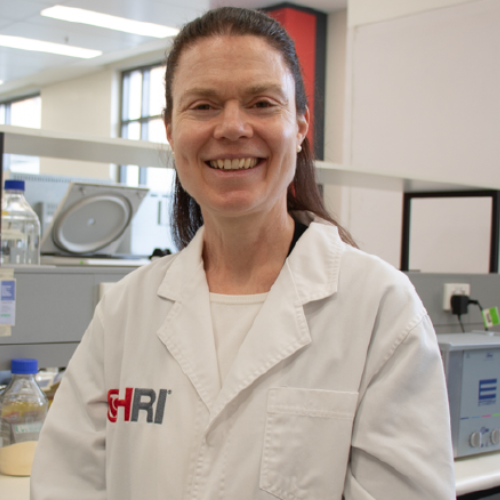
Professor Julie McMullen is the Deputy Director and Director of Research at the Heart Research Institute (HRI) and leads the Heart Muscle Group. This is her first NBCF grant.
Doxorubicin is a widely used and effective chemotherapy drug for treating breast cancer. It is commonly used to treat aggressive forms of the disease, such as Triple Negative Breast Cancer (TNBC), and is also used for Hormone Receptor Positive (HR+) breast cancer when chemotherapy is required.
Despite its effectiveness, doxorubicin can cause serious and sometimes irreversible damage to the heart, known as cardiotoxicity. The risk increases as the total amount of doxorubicin a person receives accumulates over time. To reduce the likelihood of heart damage, clinical guidelines place a lifetime limit on the amount people can receive. While this improves safety, it can also restrict the drug’s full cancer-fighting potential.1 There is a particular concern for women aged 50–69, who may already have an increased higher risk of heart disease, although cardiotoxicity can also occur unexpectedly in much younger women undergoing treatment.
Finding a way to protect the heart while maintaining – or even enhancing – the cancer-killing effects of doxorubicin remains a major unmet need in breast cancer treatment and could enable more people to safely receive the full benefit of this life-saving drug.
Professor Julie McMullen’s Pink Sky Grant project, co-funded by the National Breast Cancer Foundation (NBCF) and Cancer Institute NSW (CINSW), aims to develop a new treatment that protects the heart from chemotherapy-related damage while improving the ability of breast cancer treatments to kill cancer cells. Her team at the Heart Research Institute (HRI) has identified a promising drug that, in early studies, protected laboratory-grown human ‘mini-hearts’ from doxorubicin-induced injury while also enhancing the effectiveness of doxorubicin to kill breast cancer cells, particularly in HR+ breast cancer.
The research team will use advanced laboratory models to determine how this drug works, how it interacts when combined with chemotherapy, and whether it can reduce the heart damage that limits treatment. Ultimately, the goal is to develop a dual-action therapy that protects people from serious long-term cardiovascular side effects while improving cancer control, reducing the risk of tumour progression and recurrence, and enabling more people to benefit from highly effective treatments such as doxorubicin.
If successful, Professor McMullen’s Pink Sky Grant project could significantly improve breast cancer treatment by reducing the risk of serious heart damage caused by chemotherapy. By combining heart protection with enhanced anti-cancer activity, this approach could enable more people to safely benefit from highly effective treatments like doxorubicin while reducing long-term cardiovascular risk, improving quality of life, and supporting better cancer outcomes.
Grant code: 2025/PS0151
Active years: 2026-2029
Scientific project title: Next-Generation Dual Anti-tumour and Cardioprotective Therapies for Breast Cancer.