
Treat
You have returned to the top of the page.
Published: 08/27/26 12:01 AM
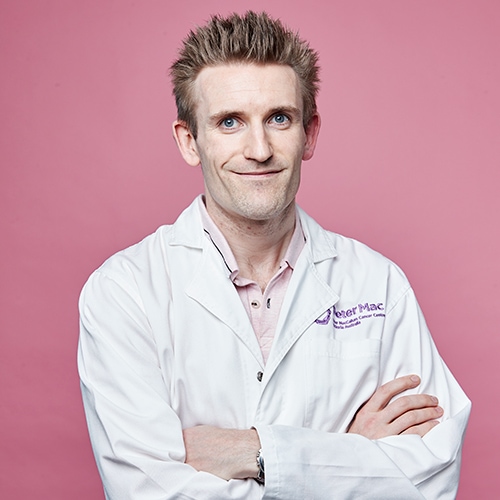
Professor Paul Beavis is a Group Leader (Paul Beavis Lab) at the Peter MacCallum Cancer Centre.
Chimeric Antigen Receptor (CAR) T cell therapy – where a person’s own immune cells are engineered to recognise and destroy cancer (becoming CAR T cells) – has transformed treatment for certain blood cancers with over 90% treatment response rates.
However, this highly effective treatment response has not yet seen in solid tumours like breast cancer. One of the key challenges is that while CAR T cells can persist for more than 10 years in people with certain blood cancers, they typically show limited persistence in people with breast cancer. Without lasting persistence, the CAR T cells cannot continue attacking the tumour over time, which potentially reduces the treatment’s effectiveness.
Professor Paul Beavis’ Pink Sky Grant project, funded by the National Breast Cancer Foundation (NBCF), tests a new hypothesis that one of the key reasons CAR T cells are less effective in the treatment of solid cancers is their inability to properly access and interact with the lymph nodes.
Lymph nodes are central hubs of the immune system that provide the environment where natural T cells (a type of immune cell) become activated, multiply and prepare to fight threats. In a previous project funded by the National Breast Cancer Foundation (NBCF), Professor Beavis and his team showed that overexpressing a particular gene called FOXO1 greatly enhanced CAR T cell effectiveness in laboratory models and was associated with more CAR T cells travelling to lymph nodes. This discovery suggests that CAR T cells in breast cancer may benefit from the support provided by the lymph nodes to boost their cancer-fighting ability.
Building on this breakthrough, the research team will use advanced gene-editing tools to design CAR T cells that can more effectively engage with the lymph node environment and the immune-activating cells inside them. Advanced imaging and computer analysis of complex biological information will be used to track how the engineered cells move, survive and respond within preclinical models. The goal is to create CAR T cells that are much more durable and can treat breast cancer more effectively.
If successful, Professor Beavis’ Pink Sky Grant project would open a completely new strategy to improve CAR T cell therapy for breast cancer – one that has never been attempted before. By tapping into the natural immune-boosting role of lymph nodes, the engineered cells may persist longer and provide more long-lasting tumour control. In the longer term, this approach could lead to new treatment options for people diagnosed with breast cancer.
Importantly, the research team already has the capability to translate laboratory findings into early-phase clinical trials. This positions the outcomes of the project to move directly toward testing in people with breast cancer. Beyond breast cancer, the findings may also help improve CAR T cell therapies for other solid tumours, offering benefits across the wider cancer community.
Grant code: 2025/PS0055
Active years: 2026-2029
Scientific project title: Leveraging the Lymph node microenvironment to enhance the efficacy of CAR T cell therapy of breast cancer