
Treat
You have returned to the top of the page.
Published: 08/27/26 12:01 AM
Co-funded by the National Breast Cancer Foundation (NBCF) and Cancer Institute NSW (CINSW)
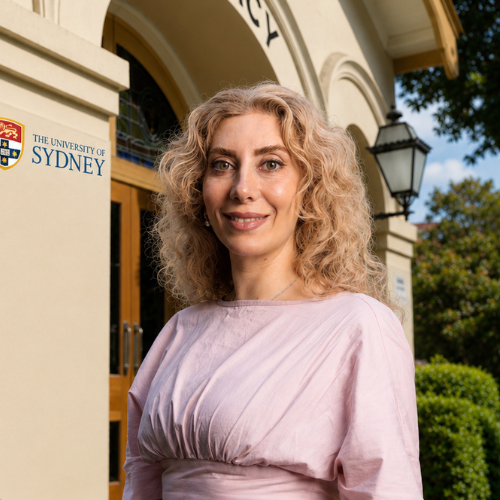
Associate Professor Pegah Varamini leads the Breast Cancer Targeting and Drug Development Group at the University of Sydney Pharmacy School.
Triple Negative Breast Cancer (TNBC) is one of the most difficult breast cancers to treat because it lacks the common receptors that many modern therapies rely on. TNBC is also more likely to affect younger women and is associated with poorer outcomes and fewer treatment options.
Although chemotherapy can be effective, it travels throughout the body and can affect healthy as well as cancerous cells, often causing significant side effects. For some people, the cancer may also stop responding or return after treatment, creating an urgent need for more precise and effective options.
New cancer-targeting treatments, such as antibody-drug conjugates (ADCs), have shown promise in TNBC. These therapies use antibodies to deliver drugs directly to cancer cells. However, these large and complex medicines can be challenging and costly to manufacture, and their size may limit how evenly they penetrate some solid tumours. Additional targeted treatments are needed that are smaller, simpler to produce and capable of reaching cancer cells throughout the tumour.
After almost a decade of development, Associate Professor Varamini and her team are now at a critical translational stage: generating the final preclinical evidence needed to determine whether this Australian-developed innovation can advance towards testing in people with TNBC.
Their new therapy is a peptide-drug conjugate (PDC), which combines a small targeting peptide with a potent cancer-killing drug. The peptide is designed to recognise receptors called LHRH, a target found in more than 70% of TNBC tumours, and bind preferentially to cancer cells bearing this receptor. Once taken up by the cancer cell, the PDC is designed to release the cancer-killing drug inside it. The goal is to concentrate more of the treatment where it is needed while reducing exposure of healthy tissues to chemotherapy.
Compared with ADCs, this PDC is much smaller, which may allow it to penetrate more deeply into tumours. It is also fully synthetic, making it simpler and more cost‑effective to manufacture, and potentially less likely to trigger unwanted immune responses.
This Pink Sky Grant Grant project, co-funded by the National Breast Cancer Foundation (NBCF) and Cancer Institute NSW (CINSW), will complete the final stages of preclinical development needed before human clinical trials. The research team will evaluate how well the PDC affects tumour growth in human-derived laboratory models that reflect the variation in LHRH levels seen in people with TNBC. They will also assess its safety and toxicity and investigate how the drug is distributed, processed and cleared by the body. Machine-learning tools will be developed to explore which tumour characteristics are associated with a stronger response, potentially helping to identify the people most likely to benefit in the future.
If successful, Associate Professor Varamini’s Pink Sky Grant Grant project could generate the evidence needed to progress this new therapy to early-phase clinical trials. The PDC has the potential to improve treatment by delivering chemotherapy more precisely to TNBC tumours, reducing unnecessary side effects and improving how the cancer-killing drug reaches the cancer. Its simpler, lower‑cost manufacturing process may also make it more scalable and accessible than some current targeted therapies such as ADCs. In the long term, this approach could support more personalised and widely available treatment options for people with TNBC.
Grant code: 2025/PS0150
Active years: 2026-2028
Scientific project title: Translational Pharmacology of a Novel Peptide-Drug Conjugate for Triple-Negative Breast Cancer: Bridging to Phase I Clinical Trials